Monday, August 24, 2009

Disgraceland, Chicago: Closed.


I loved this resale store. It was my absolute favourite. I used to make trips out to Chicago with this store and the Chicago Diner as my main points of destination. The staff was great. Many items I purchased were worn on stage during my drag king years. I will miss Disgraceland for a long time.

Monday, August 17, 2009

Boot to Woot

I bought a t-shirt from Woot yesterday--a totally impulsive purchase. Today I am regretting not having done my homework about woot.com. Their t-shirt today is offensive. It features a racist and sexist image, and I have come to realize that this is definitely not a company I want to support. Send me links to blogs and info that speaks out about Woot's bad politics. It seems like a lot of folks have encountered similar critiques with this company.

Saturday, August 1, 2009

Farmer's Market Clothing Swap and Sassy Singles Solidarity

I have two questions for you:

1) Has anyone tried to organize a clothing swap table at their local farmer's market? Any advice for how to get such a thing started? It seems like it should be straightforward...

2) I'm looking for info and stories from people over thirty(ish) who are committed to being single and who also maintain and prioritize a community of friends and chosen family over (romantic) couple-formations in their lives. What sorts of questions, challenges, delights, conflicts, strengths do you think surface when making the choice to be single amid dominant practices that seem to endorse and advocate (monogamous) coupling?

I've been reading some great blogs by people who talk about being single but not solo, and I am wondering what kind of access they have to communities of friends and chosen family that not only support their choices but collaborate actively on making this way of living possible. How, for instance, might people configure their needs and desires in ways that get met when there isn't one person essentially appointed (or expected) to do certain things--mundane or serious--i.e. rush to your bedside if you're ill, rush into your bed when you're horny, make your bed for you when you're really busy... Does this single-life choice demand that you live in a large urban center in order to rely on a large community of friends? How deeply does location play into this? And how does age, race, ability, class, belief-system, gender, sexuality... also shape the single-choice-experience?

I'm putting these questions "out there" because I've been thinking a lot about the queerness of singlehood and how to DO singlehood in queer ways that feel personalized, critical, honest, and comforting. I'm really curious about what other people are doing and thinking and this sort of thing doesn't come up easily in a Google search! I started by asking for info and stories from people over thirty(ish) not because I don't think people in their twenties are legitimately making this kind of choice, but because I am in the thirty-plus age group, which for me has meant a paradigm shift in my thoughts about singleness and aging.

There are, I believe, charged intersections between performing and fashioning sexuality and singlehood. More to come...

Sunday, July 26, 2009

A Well-Traveled Panty and Some Zine Info


Strolling through the packaged undies section of Target has left me wondering about the politics of underwear: fabric, dye, stitching, labour, packaging, marketing, import/export, processes of globalization and garment industries... What are the histories and contexts for western undies? How does the underwear market play out gender, class, sex, age, race, body politics, colonial power dynamics, and conventions for "propriety?" I know MT and Cupcake talked a bit about this in their Feminist Critical Theory class last year... I wish I had been there.

* * *

I just read some info about a "Radical Fatshion Zine." They write:

"Would you be interested in helping create a potentially low participation/totally pleasurable (like, you would only do the tasks that you are super interested in. no more, no less.) zine about radical and accessible and fierce fatshion?"

They say to contact: afrotitty@gmail.com. They are also on Facebook.

Thursday, June 25, 2009

Sex Workers! Karate! And boobs for everyone!


Such great news. A group of sex workers in India, it appears, is learning karate:

http://uk.reuters.com/news/video?videoId=106053

An unrelated thought... I want to post a blog about queerfemmes and boobs: boobs and queerfemme identity; small-boobed femmes; boobless femmes; self-breast examinations; bras that (don't) fit; boob assumptions; mastectomies; boob contradictions; great boob expectations; boob enhancements; boob reductions; size size size; queer boobs; boobs and the babycrazies (all this crap I'm hearing lately praising pregnancy for bigger boobs but simultaneously blaming it for so-called baby "fat"); boob bombardment; boob health; boob worries and woes; Tune In Tokyo; motorboating; leave it to cleave; how cleavage divides us (right?!!); boob play; the ladies' consent... Yah. I want to explore all of this. Wanna add some ideas before I get started?

Wednesday, June 17, 2009

Sitcoms and Fat Politics

I just discovered that I can watch Golden Girls reruns on TV after I come home from work. I love this. And watching this show as an adult means I can now see the politically progressive writing that was going on. I love this, too. I guess you might be expecting this blog to tackle the shoulder pads, clip-on earrings, and Dorothy's white boots, and though I'm cringing I'm going to avoid all of that for now.

Instead I just want to question (AGAIN!) why anti-fat humour is so permissible, even within the most politically conscious pockets of the media. It's killing my hope that I can be mildly entertained from a seated position on the couch for an hour after I've worked hard all day. I'm in my thirties for fucksake--I like to sit down after work. But it's depressing that even the TV I love isn't safe. Fat isn't funny in the ways the media wants me to think it is. I don't know how many times I can repeat this.

So, here's an interesting blog I just came across that talks about the Kirstie Alley stuff that happened recently:

http://fatosphere.blogspot.com/

While I disagree with this blogger that a) Kirstie Alley sucked on Cheers and b) we should be targeting her with our blame, I think they make a few good points about the fatphobic media's agenda. This blog is also useful in that it links several other noteworthy fat-positive blogs happening out there.

I also found information about a Fat and Queer Conference starting up via Facebook. Sounds like some good things are taking place. Sounds more like the kind of stuff I want to come home to, but I had to turn the TV off to access it, of course.

Saturday, May 16, 2009

Perverts, Punctuation, and Performing Public Privacy

I've been putting this off because it's depressing and difficult and I'd rather not have to relive it. But here it is: I was at an academic conference in March, perusing the book tables, and I happened to be dressed casually since it was the last day of the conference. I was wearing this:

Some middle-agey white guy at the next book table catches my eye, smiles and says: "I really like your shirt." I say "thanks." He asks me where I got it. I tell him it's from a feminist bookstore no longer in operation. He smiles kindly and says: "Oh well that's a great shirt." I thank him again. He adds (still smiling): "And the apostrophes are in all the right places." I'm still nodding and smiling back but suddenly feel confused. Before I absorb what has happened he turns around and walks away.

I don't think of myself as naive, but this interaction took me completely by surprise. It took several minutes before I registered what he could have meant and several more minutes before I could repeat what had happened to my colleague/friend. Her reaction was one of immediate rage and disgust. She helped me realize what I was suspecting; the guy was making a wholly uninvited comment about my chest. It wasn't friendly and harmless chitchat, it was gross and inappropriate. And later over cocktails with our professor/colleague/mentor/advisor who also identifies as a feminist, we hashed out and reacted to how absolutely awful this incident was on so many accounts. She remarked that this guy was, unfortunately, representative of a lot of men she had encountered at such conferences. Vomit.

What was even more surprising to me was that minutes after this incident occurred, I was walking out of the book room and another guy stopped me to ask what my shirt said. He made direct eye contact with me as he spoke, and was very clearly avoiding looking down at my chest. My colleagues and I had to laugh at this ironic sequence of events, which we continued to process for a long time afterward.

Every time I've put on this shirt since returning from the conference I've thought about that guy, his sense of entitlement, that he could go ahead and comment on my body without any consideration of how I might feel, without any respect. It's even more ironic when I think about the message written across the shirt, calling for respect toward women and their bodies (playful though this message may be worded). In truth, I wear clothing with writing on it expecting people to read what it says no matter where the words are placed. Go ahead! Read my shirt! Maybe you'll learn something. But this is NOT an invitation to objectify, feast and comment on my body. Making that leap from observing to consuming my self-presentation is indicative of your learned misogyny and privilege. It is NOT consensual.

Lady A. and I came face to face with this sort of dickheadery yesterday when dressed in our queerleader outfits, cheering for our friends' softball team as we do every Friday. A crotchedy ol' guy told us flat out that he was seating himself behind us so that he could watch "the view" as we cheered. When we told him to get lost and stop being gross he got defensive, and actually argued that we "dress like this and go out into a public space" and then have the "nerve" to call him "a pervert." Eventually we joined forces to drive him off our bench, making it entirely clear that he was unwelcome. But he went away grumbling, not apologizing (of course), probably chalking it up to our "bitchiness" rather than his unfair privilege and sexist fucking attitude.

Let me be clear: I dress (and fully intend to continue dressing) how I want whenever I want and my choice of dress DOES NOT serve as a free-for-all occasion to objectify and sexualize me. My body is not a public buffet. And here's where I'm sure it gets complicated for all the sexist fucks out there: Feminine-presenting individuals have every right to choose when, how, and if we wish to invite (sexual) attention, but that choice is ours to make. No one should assume. No one is entitled.

I think the person who dresses and the person observing the dress(ed) are "in relation(ship)" to/with one another--to varying degrees, of course. And when I say "in relation(ship)" I mean a lot of abstract things, but one thought I'd like to put out there is that dressers/observers aren't necessarily occupying polarized or dichotomous positions. For example, when I dress I *might* have an audience/observer in mind. I see dressing as costume, masquerade, a performance. For me, it is rarely an isolated act; I often construct and imagine my audience/observer AS I dress. So like the text printed across my shirt, I invite eyes to look at and engage with (and maybe delight in) my choice of clothing. But this doesn't stand as an invitation to fall into sexist scripts of objectification or power-over dynamics.

Anyway, I'm feeling somewhat defeated and lost because I don't know how to sum this up and present it to those who need to "get" it the most, especially in those swift, surprising moments when shit happens.

Thursday, April 30, 2009

SexWorkers and QueerFemmes: Dressed like a hooker and loving every bit of it.

I've been worrying about feminists whose politics stop short when it comes to sex worker rights. When talking about sex work, I want to replace terms of victimization and moral judgement with efforts toward labour rights and pro-choice attitudes. Who's with me?

Lovely Lady A. brilliantly writes: "i think, on a basic level, both sex workers and queerfeemes are devalued b/c of their undesirable (or rather extremely desirable?) performances of femininity. words that come to mind are: slut, bitch, loose, immoral, immodest, scandalous--not the kind of femininity that is accepted (i.e. desirable--or rather extremely undesirable), such as nice blouses and skirts from the softer side of sears."

Reluctance to be identified as someone who “dresses like a hooker” underscores an anti-sexworker stance. Number 1: There ain’t anything wrong with hookers so, Number 2: There ain’t anything wrong with “looking like” one. Can we please stop defining sex work within puritanical, patriarchal discourses of morality?

Who decided that clothing is always a measure/representation/expression of sexuality in the first place? Maybe a short skirt is no more/less sexual than a veil or a "softer-side-of-sears blouse." Maybe it’s more about our baggage—the stuff we associate with these items and choices of clothing that’s the problem. Maybe there’s a function to a short skirt that involves something other than sex and if/where it’s intended to involve sex then three cheers for that too!

It’s from a place of queerfemmery that I feel a responsibility and desire to be a sexworker activist/ally and to acknowledge, voice, and take pride in my own participation and complicity in ranging aspects of sexwork. Sex work, to me, is a form of labour that--like many other kinds of work--makes visible the interconnectedness of gender, body, race, class, etc. politics, privileges, and oppressions. I see sex work as an enormous and important industry. I value the labour of sex workers. This is NOT about morality. To admonish sex workers in any way, including, of course, clothing choices, is to link arms with those who want to police and regulate "moral" codes for femininity.

Lastly (for now), my body labours for wages everyday in my work as a teacher (and sometimes I wear short skirts while earning my state dollars). I "use" my body to do this work and I get paid for its use. I even get health insurance and summers off. So why don't sex workers get to share the same benefits? Right, we're trapped in the puritanically-collared land of the "free."

Monday, April 27, 2009

Open-carry debates: How many more brain cells can we afford to lose?


Oh I've just fucking had it with this open-carry bullshit I keep hearing on public radio. I am ANTI-OPEN-CARRY. I wish gun owners had their own planet where they could hunt and kill among themselves. Participants in today's debates argued the following offensive points:

1) If we ban guns we should ban pit bull terriers also.
2) It's not an open-carry law that's the problem, it's that people react to seeing guns out in public that messes shit up. You see, if only people wouldn't call the cops and get worried every time they saw someone carrying a gun, there wouldn't be problem with open-carry.

Are you kidding me? Where am I? Who are we? How did guns become a fashion accessory? Or an animal-like companion? These arguments are so depressing I don't even want to fashion a smart response.

Well here's this:


And this:


And I'm calling it a day.

Friday, April 10, 2009

Mander on Mandals

A big shout out to fashion spotter of the week, The Manderpants, who texted me from the airport at 7:47am with the first socks-and-sandals sighting of 2009.

Friends, this is an epidemic. Protect yourselves. Remember my words: Socks plus sandals equals scandals. Let's enjoy a scandals-free summer. Yes we can.

Thursday, January 29, 2009

Feasting on Queers: Allies and Assholes my Academic Arena


It's come to my attention that a lot of people in my workplace who claim to have thoughtful analyses of identity are perfectly willing to overwrite the identity claims/affiliations I've articulated about myself. I am entirely exhausted by heteronormative assumptions and expectations that run much deeper than I ever anticipated in my workplace. Was I naive to think that some of the self-assured "liberals" I work with actually know anything about identity politics? Maybe. But people are misleading, and as I've learned time and time again, assholes (too often) finish first.

If sexual harassment (whether or not the law recognizes it) takes a variety of forms, then I assure you I'm feeling somewhat sexually harassed. My choice to be out as queer at work has been everything from great to terrible. I often struggle to reconcile my proud queer identity in an academic institution that affords only small moments of lip service to queers while it maintains an unquestioned, heternormative, deeply conservative, corporate agenda.

That said, my choice to be out as queer among my colleagues is my CHOICE. But my colleagues' choice to think, for even one brief moment, about what that might mean for me is entirely out of my hands. It turns out I am surrounded by some disturbingly cavalier, presumptuous, non-allies, who moonlight as managers at a rumour mill specializing in people's sex lives. It must be a challenge to add spice to straight and narrow scripted lifestyles, and so, it makes sense they've turned to the token queer for dramatic inspiration. Really, what can I say to that?

I have to wonder if being open about my sexual identity has invited people to want to pry further into my sex life, make assumptions, ignore assertions I've made about myself if they seem unfitting to the narratives these people are/were hoping to create. Is that how my workplace justifies feasting on my body? They feel entitled to produce creative renderings of what my body does? What about my consent? What about my voice? Whatever narratives have been created about me have NEVER been checked out directly WITH me and THAT is, perhaps, the part of me that feels most erased--my right to speak for myself.

It might serve my workplace well to string a banner in the mailroom that reads: A Dose of Dick Will Cure the Dyke. At least then I'll feel a little less blind-sighted to people's politics, and I'll be more protective, less willing to take their loyalty and consideration at face value. But perhaps the problem here has less to do with the speculation that I've been "cured," but rather, the disbelief that I was every "really" a dyke to begin with. And my guess is that THIS has more to do with my gender presentation than anything else.

In a world where "femme" is too often invisible or disconnected from "queer" I have to say I feel pretty fucking trapped amid ignorant assumptions. Not victimized, but trapped. What good has it done for me to come out in a setting that refuses to accept, believe, and honour my asserted identity? I am no closer to ensuring people understand who I am now that their juicy stories have trumped my lived realities. Well, I can't devote much more time to this bullshit right now so I'm just going to carry on with my day.

Tuesday, January 27, 2009

Girlcott the TV Guide Channel


I just wanted background sound for the ten minutes it took me to eat my lunch so I turned on the TV. Not wanting to flip through all the crap, I went directly to the TV Guide Channel, or should I say the 24-Hour Fat Phobia Generator. They were airing interviews with personal trainers to the stars, and these trainers had lots to say about how people, anyone, like even you and me, could have "hard" bodies like Madonna for example. One trainer explained that it was all about "hard work" and your genetic makeup didn't matter that much. Another trainer even declared we could learn the secret to longer limbs.

I dunno about you, but I am a full grown adult woman who stands at a whopping 5 foot 4. But apparently there's a secret that will lengthen my limbs? Two responses: 1) really? and 2) no fucking thanks.

"Hard work" is interesting and nuanced and kind of fucked up. On a completely personal note, I've noticed a correlation between exercise, circulation, and mood. When I exercise, I feel warmer for the rest of the day, which for always-chilled-me is a pretty great reward. I also notice that exercising somewhat frequently regulates my moods; it makes stress more manageable and I don't tend to feel long stretches of the blues and blahs. And no, I don't "work" very "hard" for these benefits but I still get them. Why wouldn't that be enough? Or maybe a commitment to being proactive about my circulation and mood is, in fact, hard work and in that sense I'm working very hard on my own terms.

Fat phobic TV seems to have a definition of "hard work" that defies genetics, reveals secrets, and frankly, attempts to ruin my lunch. Of course I won't let it. Next time I want background noise I'm going to try WPR or maybe just the sound of Mabel snoring. She's got "hard work" down.

Monday, January 26, 2009

Quick and Dirty

It's been a while. I don't want to lose too much steam so here's some stuff I've been thinking about:

Dressing up for the first day of the semester when it's freezing cold outside... it's a challenge and a conflict.

Feminine-presenting teachers often receive comments/judgments on their physical appearance (clothing, "looks," hair...) in student evaluations. How incredibly sexist is that?

I can't for the life of me find a pair of vegetarian plain black boots with decent flat soles (for walking on ice) that fit my calves. Narrow calf boots meeting these requirements seem to run in the $200 and upward range. ARE YOU KIDDING? It's a real affirmation that thinness is posh in much of my immediate fashion world. It's exhausting and classist (to say the least).

Heteronormativity in the workplace (my workplace being academia) is palpable. I'm seeing this in terms of benefits, social networking, and simultaneously tacit and overt gender codes for "appropriateness." What is going on here?

If you don't like dress shoes don't wear 'em. I say so.

Is there a way to avoid cardigan pits so you don't have to launder the cardies after every wear?

My household has been having frequent talks about cleavage (and our love of it) recently. Home sweet homo.

What radical political queer fashion thoughts have your panties in a twist? Please share.

Monday, January 12, 2009

Gaza. Now.

Let me be clear: I do not align myself with ANY religious views in spite of my prescriptive faith-based upbringing. In fact, it is precisely my experiences with religion that led to the critical choices I've made, steering myself away from these practices and beliefs.

My question is actually pretty simple: isn't this genocide? And what the fuck are we doing? We are all implicated in this:

http://news.bbc.co.uk/2/hi/middle_east/7825480.stm

Wednesday, January 7, 2009

Gendering Cells

My cell (and only) phone committed suicide on Monday afternoon. The battery is completely fucked and I consequently lost all of my contacts, pictures, and worst of all, the text messages I had been saving for sentimental reasons throughout the last year or so. But it’s ok. It’s forcing another new start for me and although it’s a nuisance having to collect and enter everyone’s phone numbers from scratch it’s really not that terrible.


The phone people asked me if I wanted to get a new one with a full keyboard or super video functions or double flip or music download-ability. (We’ve come a long way, baby.) I refused. I told them I wanted a replacement for my very basic flip phone, and I wanted something very inexpensive. The salesperson walked me over to the section of phones that fit this description, warning me that ANY and EVERY phone available would be much more advanced than my two-year old phone that had just died. But I was sorely disappointed. Everything was boxy looking—sharp right angles, lots of silvery metal, no colour, no sass. Finally, the salesperson (reading my lack of enthusiasm) led me to the cheapest phone available—a light blue razor-style with rounded corners. Without even touching it I knew it was the one.


It occurred to me in that moment that there’s something to be said about phones and technology and gendered aesthetics. I wanted something cheap and that was my first priority. But then I wanted something that looked softer, less machine-like, and more colourful than the first selection of phones I saw. I later described my new phone as more “feminine” and admitted that this quality was what compelled me to choose it. Am I uncritically gendering cell phones? Or, more accurately, how have I been seduced by the gendered marketing ploys of phone-designers?


The tragedy of all this is that phone-makers’ rendering of gender fits so squarely into stereotypical, mainstream depictions of masculine/feminine binaries (and I totally rolled with it!). But here’s the messier stuff: why are the more gadgety, tech-savvy, do-your-taxes-and-make-you-dinner phones made to look a certain way? How have we been culturally programmed to associate technologies with gender, race, class... through aesthetics of decorum, dependability, advancement…? I think it’s worth paying attention to the aesthetics of technologies, what attracts and repels us and why, and how the nuances of these aesthetics cut across the complicated ideals of “progress.”

My new phone functions. It suits my purposes and I hope it will last. And I consider myself very fortunate to have been able to replace the old one. But I have to wonder if the phone-folks make the cheap “girly” ones to fall apart sooner…disposable and weak. It’s not an anti-feminist conspiracy at work as much as I think THAT’S the heart of stereotypical, mainstream depictions of masculine/feminine binaries. And I just can’t roll with it.

Wednesday, December 31, 2008

My New Year's Outfit

Bra-less, hospital scrubs, ankle socks, a plate full of greasy grilled cheese and cookies resting on my belly and a glass of delicious wine in hand. I'm in bed with Netflix. My nonsexual spouse called me for the countdown from Illinois (I think) where he was stuck at a party hosted by and filled with breeders. We had a phone kiss (of the nonsexual sort of course). Best. Lesbian. NewYear's. Ever. No compromises. Totally queer. And I think this is a good look for me.

Sunday, December 28, 2008

Taste More Gender: Death of a Dragking

Is it too much to ask for dragking troupes to examine their politics and check their misogyny and racism at the door? Dragkinging has been a tremendously influential and beloved cornerstone of my queer identity and so I’m writing this post from a place of love, longing, and heartbreak.

I used to learn so much from kinging and from watching the most amazing troupes and performers come together and craft radical politics into performance art through creative costuming, choreography, set design, and reappropriation of mainstream pop media and music. They were building off histories and traditions of drag culture, a lot of which originated in (dyke) bars and living rooms and cabarets… the margins, left banks, and fringes. But over the past two years I’ve felt hurt, offended, frustrated, and dismissed in the dragking world to which I once sincerely belonged. It seems like so many of the greatest troupes and performers have shut down operation and left the stage. What’s happened to dragkinging as I knew it? Has this aspect of LGBTQ culture and community regressed just as quickly and brightly as it once evolved?

One of the things I love most about my queer community is that we are comfortably willing to remain uncomfortable. Our language, ideas, politics, and sites from which we organize and act are in constant flux. So on one hand, I think so what if dragkinging as I knew it is over? Maybe we’ve moved on to other stuff (for me it’s art-making, blogging, and podcasting) but that won’t last long either. I can live with that and I welcome it. It’s how we grow and shift and change. But the thing is dragkinging is still around. And while there are still probably lots of fabulous troupes and performers out there, my heartbreak is confined to the kinging in my immediate world that has become something incredibly disappointing.

In my past experience, there was often debate and disagreement about whether to approach kinging as performance “art” or something with ARGUABLY less “elitist” connotations. (I want to be clear that I am NOT in the camp of people who see art as wholly, fixedly, and inevitably elite. To make this claim would deny all the grassroots, DIY, daily practiced, personal, indefinable, and outsider art people engage, make, produce, and consume.) But regardless of the diverse visions performers and audiences have held in terms of venue choices (theatre vs. dyke bar), audience interaction (dance on anyone who looks interested vs. maintain the “fourth” wall of the stage), isn’t it at least fair to ask for reflection on the kinds of politics represented in king shows?

I loved kinging for the ways in which it critiqued—NOT reproduced—stock versions of masculinity, misogyny, and racism. So, imagine my embarrassment and sorrow then when one of the kings in my troupe lip-synced the lyrics “she’s a crazy bitch but she fucks so good I’m on top of it” while thrusting his dick in audience members’ faces. His performance was not to critique these lyrics but rather to act them out… literally. I once confronted a king about the lyrics in their act, asking if/how they saw those lyrics as misogynist. The king laughed as said “oh I figured you’d be mad about that because you’re a feminist.” What? You aren’t? No, I guess you aren’t. I’ve likewise found it troubling that in a mostly white troupe kings with white skin privilege are unreflectively appropriating (sometimes in blackface!) the music of artists of colour. We need a dialogue about this! It doesn’t feel ok.

For two and a half years I belonged to a local gender performance troupe. This troupe was (in its heyday) somewhat unique in that performers worked from a variety of places on the gender spectrum. There was even a short time period during which those of us who performed mostly femmes roles outnumbered the dragkings, queens, andro, bois... It was during this time I felt our troupe was growing toward something highly political and subversive, mainly because the quality of the acts and the details we put into each show was (I believe) at its peak. But it was also during this “femme heavy” time that everything seemed to fall to pieces.

Particular femmes were called out as “intimidating” because our voices were loud, we were outspoken, and thus labeled “a force to be reckoned with.” What does that mean? We were ladies with opinions, holy shit. Call the cops. And somehow these critiques got anchored to our performances of femmeness, despite the diverse ways in which we each interpreted and enacted femme identity. It was a weird and upsetting turning point that (for me) underscored a reproduction of gender division and sexism in a community I once thought to be safer of sorts.
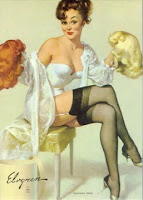
I didn’t know how to reconcile all this stuff at the time so after some email exchanges and breakdown meetings I made the decision to resign from the troupe. But as I write this blog I have to wonder if all of this stuff is deeply connected. A lot of the debates about venues and art and elitism were intertwined with discussions about how our troupe needed a balance between political acts and entertainment—as if these are mutually exclusive terms! But maybe that’s just it: my overwhelming enthusiasm for dragkinging was about queering (as a verb) our costumes, our genders and our sense of creativity itself in ways that COULD NOT be distilled or separated out. Queering, to me, IS political in a way that affects and alters the idea of performance itself—its venues, audiences, performers and their acts. And I guess not everyone welcomes that kind of change no matter how open or unspecified or nonlinear it is. Change is scary when it asks us to question how some people are unfairly privileged in a setting that claims to be collaborative.

So in my world, the carnival lights are off. My wigs, boas, chest hair, tutus, tiaras, and cop hats are in a drawer. And I’m looking for something queer to do on a Saturday night.

(A shout out to Rodney for this title!)

Friday, December 26, 2008

Fatastic

It’s “Hate Your Body” season again. We’re about to be barraged with ads, commercials, and general campaigns designed to make us fear fat and feel guilty and ugly. It’s amazing how swiftly fatphobic agendas get disguised as mandates for “healthier” living. Healthy does not universally equal thin. Fat does not universally equal unhealthy. “Love Your Body” movements don’t always align with fat acceptance work (props to Lady A. for pointing this one out).

Anchored in all this fatphobia and body hatred is a lot of racism, sexism, classism, ageism, and overt anti-“disability” attitudes. This shit is part of a larger white supremacist, elite, capitalist, colonizing mission AND it can be so seductive and convincing. How can we arm ourselves against this stuff without feeling victimized? And as feminists, how can we acknowledge and admit the ways in which this fatphobic bullshit tests our sense of security, supporting (instead of reprimanding) each other through it?

I lost a shit-ton of weight last year and I was probably unhealthier then than I’ve ever been in my life. Likewise, you can work out and eat “well” on a regular basis and still be “fat.” *If you haven’t already, you should totally listen to episode #4 of FemmeCast, “Health at Every Size.” The idea of “fat” seems at once deterministic and undefined. It’s a contradiction. But it’s also a lived reality.

Some fat acceptance groups have been accused of so-called gate-keeping, for discerning who can and cannot be part of the group. Sure, a lot of people see themselves as fat but I really think we need to take stock of possible distinctions between fat-thinking and the experience of occupying a fat body in our totally sizeist society. I’m not suggesting that definitions of fat are fixed or easy to come by, I’m just saying that I’ve had to think a lot about what it means for me to be a fat acceptance ally, and to recognize the need for safer, separate spaces and community organizing.

Along similar lines, I’ve been questioning the “Love Your Body” projects that came out of feminist movements, wondering about where they overlap and diverge from fat acceptance. Love your body…YES! By all means, love the fuck out of it! But the simple act of encouraging body love will be received, enacted, and experienced differently depending on each individual. That seems like an obvious point to make but I think I’m talking specifically about the fact that it might be a lot easier to learn to love your body when your body more readily matches the dominant prototypes out there. There is a certain kind of politic to fat acceptance that seems to be overwritten in the “Love Your Body” stuff. What do you think?

Well I’m in total hibernation mode. (It took several rounds of debate last night just to decide whether my sweetbabies and I were going break tradition and stay home, all because we were feeling too cozy and tuckered to go out. We did go out but compromised on the location. It was totally worth it. I digress.) And as I hibernate, I’m bracing myself for all the post-holiday weight-loss crap I’m likely to be fed on the fucking TV. I suspect that the whole tradition of making New Year’s resolutions was created by someone working for Jenny Craig or “Dr.” Atkins or Bally’s or an ab-roller company. I feel like there’s something tragic about seeing food in terms of points, rather than something that is nourishing, sustaining, and pleasurable. But I also need to keep this judgment in check as part of my feminist perspective. This is complicated stuff and I can’t wait to hear what y’all think.

Thursday, December 25, 2008

Your Daddy’s Middle-class and Your Mama’s the Ugly Duckling

(This blog entry is a continuation from “Your Daddy’s Rich and Your Mama’s Good-looking”)

It’s a challenge to work through the complexities of my parents’ immigration story. I suppose it fits somewhat neatly with dominant tales of desolate, impoverished beginnings, hard work and upward mobility, risks and opportunity, alienation from “home,” and diasporic settlement… But nothing seems clear-cut and for every value and lesson I inherited I find myself asking questions, trying to push at my politics toward (self) improvement. An unreachable goal?


I grew up wearing some hand-me-downs and inexpensive shoes from K-mart that were incessantly ridiculed at school and, on a rare occasion, a popular brand name item but only after its popularity was dying out. I was the odd, meek, brown kid who could never keep up with the Jones’ and perhaps because I wasn’t ever allowed to forget this fact I very quickly became hyper-aware of the cultural capital one could accumulate solely by their mode of dress. And it was because of this acute knowledge I had gained that I entered the boxing ring of castaway clothing with my mom.

“Vhy you von’t vear this perfectly good jean? You vanted it. Now you don’t vant.” Then there were my dad’s guilt trips: “Children in India vould be so happy to have just von shoe like this. You hawe two.” My parents were entirely unconcerned with my hyper-vigilant image-consciousness.

It was impressed upon me from a very young age that food and clothing were a privilege and many people were without either. And out of this came the “just-be-grateful” rhetoric, one that I’ve radically reexamined as an adult. If I allow myself to keep thinking of food and clothing as a privilege something very important gets lost. As a grownup I’ve decided, actually, that food and clothing are two (of many) basic human RIGHTS. To this day I tense up when people claim to “hate” certain foods. “Hating” and fearing food was never allowed in my upbringing, and every time I express my own dislike for certain tastes (in food and clothing) I compulsively trip over (and thus acknowledge) the privilege I have that enables this dislike in the first place. But what then?


I needed to replay all of this confused childhood stuff as a way to return to the third fragment of my previous post. The problem is that I still don’t know what I want to say. It’s x-mas today and I’m thinking about all the nauseating clothing and jewelry commercials I’ve being seeing on the TV for the last few weeks, and all the new clothing and jewelry people are probably receiving today, and I’m thinking about John and Yoko’s “War Is Over” earnest idealism, and the people that live and survive war, and the people occupying positions that determine who counts as “refugees,” and the choices we make about what we can afford to give and share, and the lullabies we sing to ourselves about charity and benevolence… I feel torn apart by my own cynicism but I’m not so far gone that I don’t believe there’s enough thread to sew myself back together.

I’m going to get dressed today, maybe something fancy, maybe sculpt out a rockabilly updo, and I’m going to a lesbian bar to get drunk with two of my sweetbabies who each have a deceased parent also. We’re going to be safe and fed and warm, and so help us jesus, we might even be pretty. But I will continue to think about this third unresolved, unconcluded, inconclusive fragment. Refuge is hard to find when you feel perpetually haunted.

Wednesday, December 24, 2008

Your Daddy's Rich and Your Mama's Good-looking

I’ve been avoiding writing this blog for weeks because it’s complicated and so, so long (sorry).

Again with the stories:

One
I think I read somewhere (was it in Venus Zine? online?) that M.I.A. has been admired for her badass fashion sense. If I remember correctly, her take on this is that she often mimics and reappropriates the sorts of clothing she wore as a kid—clothing that would have been castigated and belittled. Why, after all, would we expect acceptance from the racist, classist, anti-immigrant majority that surrounded her once her family moved to Britain? But funny (and typical) how the moment M.I.A. became “someone” her strategic clothing choices got characterized as style rather than trash.

Two
I walked into a public library last week and had the strangest, most unexpected experience. It’s a small modern library with lots of windows, full sunlight, and mid-height shelves. Walking inside brought me right back to my childhood, to all the times my dad used to take me to the newly built library a mile or so from our house.

He spent hours at that library, perusing books on astronomy, nature, and travel. I used to find him standing between shelves with boring-looking hard cover books (the kind with the crinkly, transparent, protective covers). He would be wearing his giant brownish-grey parka—unzipped, wide-legged polyester pants belted far above his belly—the bottoms tucked haphazardly into bulky black snow boots. He had owned this parka, the pants, and snow boots for decades. They were, I thought, so markedly unfashionable and I wished he’d get rid of them.

I was embarrassed by him. I thought everyone saw him as THE eccentric, badly dressed brown guy with a thick, inappropriate accent and no social graces, pulling a tiny black comb out of his pants pocket to fix his hat hair the second he entered any building. I often felt mortified by the way he looked and talked but more so for the fact that our kinship implicated and crucified me as Other in our racist, classist, anti-immigrant surroundings.


I can’t really describe the overwhelming feeling I got walking into that public library last week. I was wearing a giant parka and bulky black snow boots. And I couldn’t decide if I felt like the child-me again, or if I felt like my dad. I felt a weird, consuming, and sad energy for the ten minutes I was in the library, and I’ve been thinking about it everyday since. I woke up the next day in tears just replaying it in my mind, but not really understanding why.

To my dad, the public library was an amazing place. It was kind of like magic. It’s such a small privilege that I’ve often taken for granted, but just thinking about his library-less childhood makes me so grateful and appreciative. How is it possible that such a place exists where you can borrow (free of charge!) books, music, movies and more, and request items to add to their collections? How has this system that seems so antithetical to capitalist consumerism been established and sustained? Maybe it IS the last bit of magic I have access to and maybe that’s the energy I was picking up on last week. Since that day, I’ve been thinking about my dad every time I put on my snow boots.

Three
I grew up learning that when you grew out of clothes or simply didn’t want to wear them anymore they could be donated to refugees. So when the Bosnian refugees for whom my parents signed up to be the host family came over for dinner, I was surprised and charitably delighted to see the daughter wearing a “beautiful” sweater. It often crossed my child-mind to question why refugees would want to wear clothes that I had rejected, but this question collided with and dissipated amid the troubling rhetoric and assumptions of the “just grateful” refugee narratives as told by their hosts. What the fuck is up with charitable delight and gratefulness? I want to complicate and unpack these notions, which is probably going to be gross and painful.


The Cupcake shared an essay with me where he writes: “‘the very definition of ‘refugee’ is contested,’ even within the field of ‘Refugee Studies’ ([Lewellen] 172). While the question of ‘definition’ might seem a purely academic one, in the case of refugees, the ways in which refugees are defined ‘can have enormous consequences in the way refugees are treated by aid organizations and immigration authorities’ (173). In the case of refugees of settlement, resettlement, determining policy, providing aid, and repatriation, the definition of ‘refugee’ becomes a key factor in how refugees are or are not able to move, and how they are affected by the processes of globalization.”

What does it mean to seek “refuge” and to “host?” And how do these terms get caught up, tossed around, and dispersed amid the larger racist, classist, anti-foreigner contexts in which we live? Who wears the clothing we discard from our wardrobes…what makes clothing discardable in the first place?

To be continued...